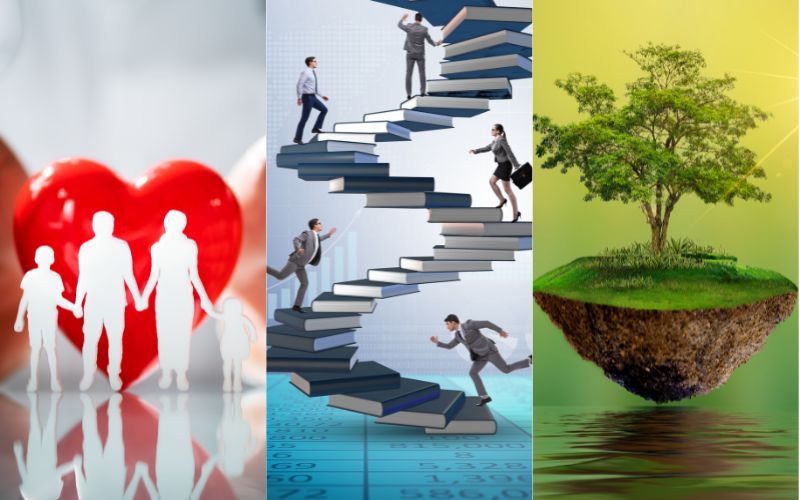
In today’s rapidly evolving world, sustainable development isn’t just a global goal — it’s a necessity. At the heart of this mission lie three interconnected pillars: Health, Education, and Environment. Together, they form the foundation of a future that is inclusive, resilient, and thriving.
Why These Three Pillars Matter
Sustainable development means meeting the needs of the present without compromising the ability of future generations to meet their own. This vision cannot be achieved by focusing on economic growth alone. It requires a people-first approach — one that safeguards well-being, empowers communities, and protects our planet.
Let’s explore how each of these pillars plays a critical role.
Health: A Cornerstone of Human Development
Good health is more than the absence of disease. It’s about physical, mental, and social well-being. When people are healthy, they can work, learn, and contribute to society. Unfortunately, access to quality healthcare is still a privilege in many parts of the world.
Initiatives that focus on maternal health, child nutrition, and preventive care are vital. Organizations like CEDS work tirelessly to reach vulnerable populations, ensuring that no one is left behind. When communities are healthy, they become stronger, more productive, and more resilient in the face of crises.
Education: Empowering the Next Generation
Education is the engine that drives progress. It opens doors, nurtures potential, and provides individuals with the tools to shape their own futures. But it’s not just about going to school — it’s about learning the skills needed to adapt and thrive in a changing world.
In the current global economy, skill development and youth empowerment are more important than ever. With rising unemployment and shifting job markets, investing in education that is relevant, inclusive, and future-ready is non-negotiable. A well-educated population is one that can innovate, problem-solve, and lead.
Environment: Protecting the Planet We Call Home
We cannot talk about development without addressing the environment. From air and water pollution to deforestation and climate change, the damage to our natural world threatens every other aspect of human life — including health and education.
By promoting the responsible use of natural resources and addressing environmental degradation, we can create a safer, more sustainable world. Community-driven actions — like planting trees, reducing waste, and conserving energy — play a powerful role in this transformation. A green future is not just an environmental cause — it’s a human one.
When These Pillars Work Together
The beauty of these three pillars lies in how interconnected they are:
-
Healthy children are better able to learn.
-
Educated individuals are more likely to understand and take action on environmental issues.
-
A clean environment reduces disease and improves overall quality of life.
Sustainable development happens when all three areas move forward together — not in isolation. That’s why holistic, grassroots efforts that combine healthcare access, education reform, and environmental awareness are making the biggest impact.
Conclusion: A Shared Responsibility
Creating a sustainable future isn’t the job of governments or NGOs alone — it’s a collective effort. Whether you’re a teacher, a doctor, a student, a policymaker, or simply a concerned citizen, your role matters.
By supporting initiatives that promote health, education, and environmental sustainability, we are investing in a world that is healthier, smarter, and greener — not just for us, but for generations to come.
Let’s build that future together.
Comments are closed.